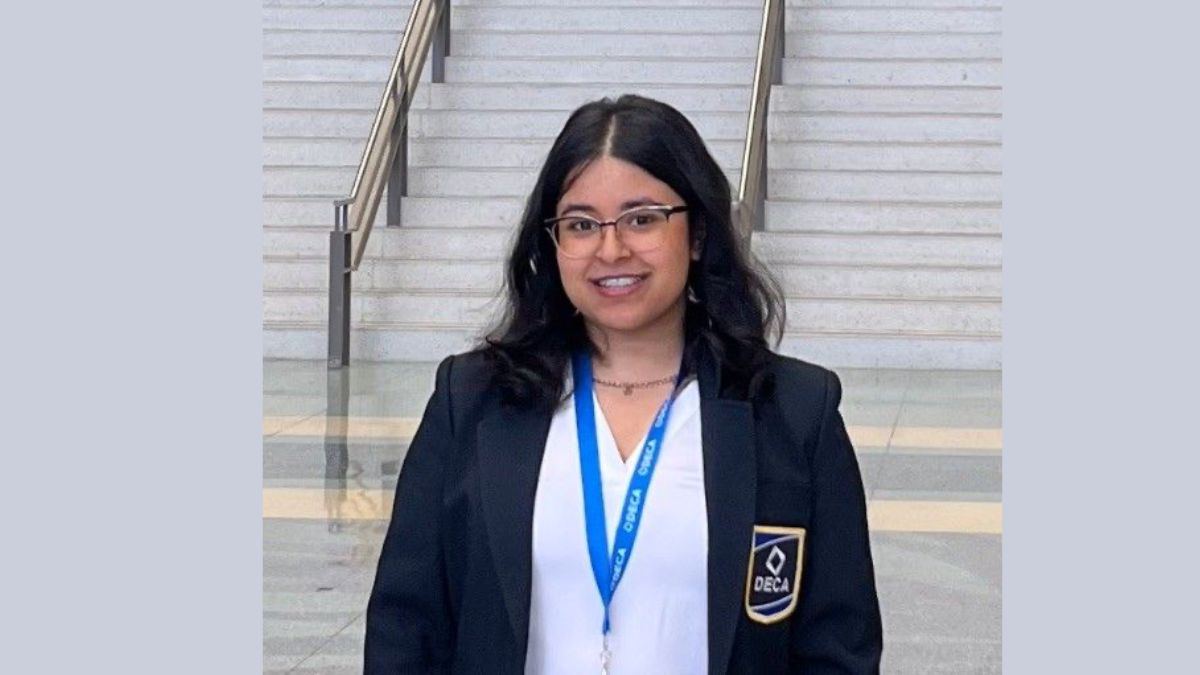
Vaibhav M. Agrawal, a maritime lawyer and former defence editor, brings a rare interdisciplinary depth to A City Called Agroha, a work now regarded as the world’s first comprehensive reconstruction of Samrat Agrasen’s ancient republic. With professional experience spanning maritime law, space law and international affairs, and a career that includes high-profile interviews and exclusive coverage of major naval projects, Vaibhav commands a uniquely informed perspective on governance, trade, regulatory systems and security frameworks. His extensive network within the Indian Armed Forces and global defence sectors has further shaped his analytical approach, enabling him to read ancient socio-economic models with the same rigour he applies to contemporary strategic institutions.
In the conversation that follows, Vaibhav reflects on the intellectual journey behind the book, the civilisational gaps it seeks to bridge, and the scholarship required to reconstruct an ancient republic with precision.
Here is the interview.
A City Called Agroha has been described as the world’s first comprehensive reconstruction of Samrat Agrasen’s republic. What was the intellectual and emotional spark that convinced you this subject demanded a full-length, multi-disciplinary work?
Vaibhav M. Agrawal: It began as a personal curiosity and evolved into a civilisational responsibility. Growing up in a community that reveres Samrat Agrasen, one often hears fragments — stories, values, trade practices, ethical norms. But when I entered the worlds of law, maritime history and governance, I realised these fragments were actually components of a deeply sophisticated socio-economic system.
The more I explored, the clearer it became that Agroha was not merely an origin story; it was an entire blueprint for ethical commerce, decentralised administration, justice mechanisms and cultural stability. Yet, despite its richness, no one had attempted a holistic reconstruction of the republic — its legal philosophy, economic logic, maritime linkages, social architecture, archaeological record or philosophical foundations.
Emotionally, I felt a persistent sense of loss. We often look outward for governance inspiration when our own civilisational memory contains remarkably refined models. I wanted to reclaim that memory — not through romanticism but through rigorous scholarship. The book is therefore both an academic undertaking and an act of intellectual restitution.
And yes, it was daunting. But some projects choose you rather than the other way around. This was one of them.
The book blends archaeology, law, epigraphy, economic history, maritime trade, oral tradition and cultural anthropology. How did you develop a methodology robust enough to integrate all these fields without collapsing into speculation or fragmentation?
Vaibhav M. Agrawal: Creating an integrated methodology was the most demanding part of the project. Each discipline has its own epistemology — its own rules of evidence, its own tolerance for interpretation, its own vocabulary. Archaeology prioritises material stratigraphy; epigraphy works with inscriptions and their silences; economic history is inferential; legal anthropology relies on context; oral tradition is fluid but culturally priceless.
To bring them together, I had to build a scaffolding where no discipline dominated the others. The principle we adopted was simple: every field offers truth, but not the whole truth. The task was to treat each fragment — whether a shard, a legend, a trade route mapping or a behavioural norm — as a data point.
- Where do these fragments converge?
- Where do they contradict?
- Where do they extend one another?
- Where do they form patterns across centuries?
Through this process, Agroha began to emerge not as reconstructed mythology, but as a layered civilisational model. It required scholarly humility as well. We resisted speculation, embraced evidence, and allowed interdisciplinary dialogue to guide the narrative.
That is why the book stands apart: it does not impose a story on Agroha; it lets Agroha reveal itself.
The book launch saw participation from diverse walks of life. What did that collective response mean to you, especially the endorsement from C.A. Uttamprakash Agarwal?
Vaibhav M. Agrawal: Seeing such a cross-section of India — legal scholars, archaeologists, defence veterans, mariners, media professionals, educators, medical experts — come together for Agroha was profoundly affirming. It showed that the subject resonates far beyond community or disciplinary lines.
What touched me most was the presence and encouragement of C.A. Uttamprakash Agarwal ji, National President of the Agroha Vikas Trust. Uttamprakash ji is not only an institutional leader but also someone with a deep cultural compass.
His appreciation felt significant because he understood the book not merely as a publication but as a civilisational intervention. When he called it “a cultural and civilisational milestone,” it carried weight — not symbolic but substantive.
Personally, I felt immense gratitude. Leaders like Uttamprakash ji provide not just validation but courage. His encouragement strengthens the conviction that reclaiming indigenous models of governance is a national, not merely an academic, endeavour.
You have previously acknowledged certain mentors as pivotal in your intellectual formation. Could you share more about their influence on your development as a legal thinker and researcher?
Vaibhav M. Agrawal: My legal and academic foundations owe much to two individuals whose influence extends far beyond formal education.
Dr Adv. Chitrasen Abhyankar has been both an intellectual and personal mentor. What distinguishes him is his ability to view law not as a compartmentalised structure, but as an ethical and civilisational framework. His conversations pushed me to interrogate assumptions, appreciate nuance and pursue scholarship with integrity. He invested in my growth with the sincerity one expects from a family elder. His influence has been an anchor.
Equally formative has been Adv. Aarti Salunkhe, who has shaped the formative years of countless lawyers. She merges discipline with empathy, and her insistence on meticulous research, structured reasoning and moral accountability deeply influenced my approach to law and scholarship. She did not merely teach — she mentored with remarkable generosity. Allow me to say that Ms Salunkhe is one of the rarest personalities I have encountered: a precise embodiment of expertise, professionalism, empathy and leadership. She is a living model of what a true leader ought to be.
I must also acknowledge two other eminent personalities. First, Adv. Metanshu Purandare, who defies conventional legal practice and has achieved in years what often takes decades. Being a first-generation lawyer himself, he taught me the art of charting one’s own direction and applying academic training to real-world challenges. Second, Adv. Capt. Rahul Varma, who significantly shaped my ability to understand business models, logistics operations and supply-chain systems, and to connect them seamlessly with law for more effective governance.
From your research, what distinguishes Agrasen’s governance model from other ancient civilisational systems?
Vaibhav M. Agrawal: Agrasen’s governance model stands out for its synthesis of moral clarity, decentralisation, economic fairness and community-driven justice. Unlike many ancient systems that concentrated political power, Agroha distributed authority across guilds, councils and family institutions. It recognised that stability arises from shared responsibility, not centralised control.
Economically, the model is astonishingly modern. Taxation norms were transparent, business conduct was governed by ethical codes, trade was incentivised without exploitation, and arbitration mechanisms reduced conflict. Agroha understood that prosperity must be aligned with integrity.
Socially, it valued dignity, familial stability and structured roles for women — an aspect often oversimplified or misrepresented in popular narratives.
What struck me most was the alignment between Agrasen’s governance philosophy and principles we now associate with constitutionalism: fairness, accountability, participatory governance, moral limits on power and systemic checks.
In many ways, Agrasen articulated frameworks that the world would rediscover millennia later.
Reconstructing an ancient republic with incomplete records can be fraught with contradictions and interpretive gaps. What was the most intellectually challenging part of this endeavour?
Vaibhav M. Agrawal: The greatest challenge was not the lack of evidence, but its dispersion across time, geography and disciplines. Agroha survives in fragments: an inscription here, an artefact there, a trade reference elsewhere, a community memory passed down orally. No single archive contains the whole picture.
The task was to resist the temptation to “simplify” the past. Ancient systems are complex, and reconstruction requires restraint. One must embrace ambiguity where evidence is insufficient and assert certainty only where data converges. This is where the expertise of co-author Neha Mhatre proved invaluable.
Another challenge was separating cultural pride from academic rigour. As an Agrawal myself, I had to maintain disciplined distance from emotional attachment to ensure the work met scholarly standards.
This difficulty, however, became a strength, forcing me to approach Agroha with honesty, objectivity and methodological precision. Equally noteworthy is the manner in which co-author Kritika Priya conceptualised the connection between ancient Agroha and modern constitutional relevance — a remarkable intellectual bridge that will serve generations to come.
After such a monumental undertaking, what do you hope A City Called Agroha contributes to contemporary Indian scholarship and public discourse?
Vaibhav M. Agrawal: My deepest hope is that the book re-centres indigenous governance models within India’s intellectual and policy discourse. Too often, we analyse our past through external frameworks, forgetting that our civilisation produced highly sophisticated systems grounded in ethics, pragmatism and cultural intelligence.
If this book encourages policymakers to engage with India’s own civilisational templates, inspires scholars to revisit neglected archives or helps communities reconnect with their intellectual heritage, it will have fulfilled its purpose.
But above all, I hope it reminds India that we do not need to borrow legitimacy from elsewhere. We simply need to remember what we have forgotten.