
Books
Meet Anvika Kaul Singh: The 17-year-old blending science, empathy, and imagination in her debut sci-fi anthology ‘Don’t Look Down’

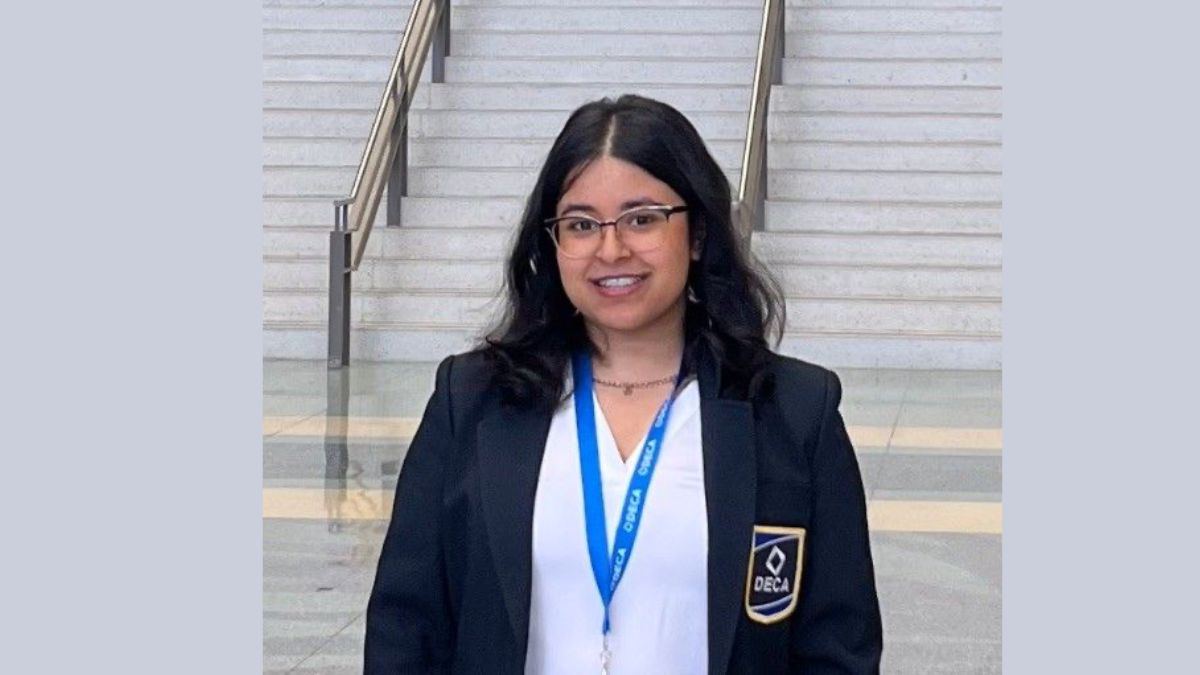
At just seventeen, Anvika Kaul Singh is already making waves as both a storyteller and a scientist. Her debut sci-fi anthology, Don’t Look Down — now available on Amazon — bridges the worlds of imagination and innovation. Rooted in her fascination with global change and technology’s human impact, Anvika’s writing transforms complex scientific ideas into deeply emotional narratives.
A student passionate about computer science and human-robot integration, she explores how machines and humans can coexist seamlessly — not in conflict, but in harmony. Her stories, much like her research, challenge us to reflect on what progress truly means and how empathy must remain at the core of every advancement.
In this candid conversation, Anvika opens up about her inspirations, her creative process, and how she hopes to redefine the boundaries between science and storytelling.
What first inspired you to write Don’t Look Down?
Anvika Kaul Singh: I’ve been writing stories for as long as I can remember, experimenting with different genres. I always used writing as a way to question the world around me. After entering several writing competitions, science fiction quickly became one of my favorite genres to explore. Don’t Look Down is an anthology of science fiction short stories I have written, all centered on global issues like rising sea levels, nanotechnology, terraforming, and tourism — and how they affect individuals through family, death, and everyday life. It’s easy to dismiss these global and rapidly escalating problems as distant future or irrelevant, but through Don’t Look Down, I wanted to challenge that notion, bring these imminent issues to life and generate a sense of urgency towards them.
How did your background in science or technology influence your storytelling?
Anvika Kaul Singh: I believe my background in a highly STEM-focused community — I mean, I am fortunate to be in the Seattle metro, literally the birthplace of tech behemoths — along with my experience in natural sciences, research, and especially computer science, has given me a unique perspective on finding patterns. For example, there are patterns in the types of characters you write, how they react to things and life, and even in how technology develops. I think having foundation in science and overall well-rounded is important because it enriches your writing, making it more accessible and relatable to anyone who might be reading it for fun and learning from it.
How did you balance hard science with imaginative fiction so readers could follow the ideas while staying invested in the story?
Anvika Kaul Singh: Well, one thing I like to believe is that readers are always smarter than you might think. And, one great thing about sci-fi is that it lets you take creative liberties and stretch the bounds of technology as long as you connect it to a current trend. Another important thing to consider is that, both in the future and even today, general people care less about the specifics of technology and more about its effects on people and its consequences. When communicating a message about the future, it’s less important to explain hard science than to create characters with emotional depth and investment.
What challenges did you face bringing this idea to life?
Anvika Kaul Singh: These stories emerged over several years and covered a range of topics, so the hardest part was editing competition-focused pieces into a cohesive narrative while still preserving the main ideas of the originals. Most of the original stories had word counts and tech depth requirements that made them more educational and intellectual rather than communicative of a message, so those had to be reworked as well. And, I’m really happy with the final product, especially how adding the prologue and epilogue helped communicate the message of taking initiative for change.
The book has been called both futuristic and deeply human. What message do you hope readers take away?
Anvika Kaul Singh: Kind of related to my previous responses, I hope readers realize that the “futuristic” problems we worry about aren’t the future; they are reflections of the present. This idea might seem basic, but it’s very, very important—I know that personally from procrastinating. I also want to emphasize that these problems aren’t just global; every scientific breakthrough or policy decision affects someone’s life, whether in a small way or a severe one. Ultimately, my main message is that progress without awareness can be dangerous, but awareness without action is just as hollow.
You write about AI and consciousness with real depth. How do you see your generation shaping technology’s future?
Anvika Kaul Singh: Oh, this is a really interesting question. A common view I’ve seen, and one I agree with is that AI is sort of the modern-day “industrial revolution.” I think my generation has a very unique and intuitive understanding of AI because younger generations naturally adapt early to new technologies. AI is already ingrained all around us, in the automatic suggestions when you search something up, in algorithmic customization, and even in school instruction and brainstorming. But what’s especially interesting about my generation is that there’s also a huge push against AI because of its effects on the environment, copyright issues, jobs, to name a few — and all for valid reasons. I think my generation will be able to foster true discussion and balance around AI, finding solutions that embrace the advancements AI brings while also protecting personal image, individual voices, and creative rights.
Do you have a favorite story or scene that captures the heart of Don’t Look Down?
Anvika Kaul Singh: I really love many of the stories in the book, but I think my favorite part is actually the prologue. I think the city description is kind of…haunting, in the way that the sort of “urban cyberpunk” space can invoke feelings of hope, or hopelessness. The whole scene is open to interpretation and sets an anticipatory mood for the rest of the book. What I like most is that, unlike much of science fiction, the prologue doesn’t immediately condemn technological development; instead, it suggests that technological advancement and progress is inevitable — but the consequences can pan either way.
Do you have any writing rituals or routines that help you focus?
Anvika Kaul Singh: I’ve found that my most productive hours are very late at night. The unfortunate drawback is that I am literally counting down the minutes until I can go to sleep. But there are very few distractions at night, and I love listening to Lana Del Rey while writing. Her music is so poetic, and all her albums and her image are so carefully curated. I really respect that as an artist and appreciate the imagination her music inspires in me.
What’s next for you — more books, research, or something entirely different?
Anvika Kaul Singh: Right now, my focus is on my computer science research, especially on human-robot workflows. I’m studying how robots can move autonomously and plan pathways that integrate seamlessly with how humans naturally move. One important metric we track is eye contact with the robot — we aim to reduce it as much as possible to show that the robot is so naturally integrated it feels ordinary. This research really aligns with what I’ve been promoting through my book and what I truly believe: technology is meant solely to make our lives better. And that requires educated and passionate people to ensure that technological advances continue in that direction.
What’s your advice for young creators or scientists who want to merge creativity with technology?
Anvika Kaul Singh: Really, never let any boundaries or lines stop you. Whether it’s your identity, like your gender or race, your ethnicity, or your interests, never let a stereotype or the divide between STEM and the humanities stop you from exploring what you love. I do computer science research and have written and published a research paper, but I also run a global literary magazine, where I’m the co–editor-in-chief. I actually coded its website, it’s saintsandfleurs.com, and I also designed the webpage and curated the images. We published 35 submissions from 12 countries and have nearly 70K readership. What I want to impress upon is that no lines should stop you, and if anyone tries to put you in a box, ignore it, because a box should never stop you from learning and doing what you love.
Closing Notes
Listening to Anvika Kaul Singh speak is like catching a glimpse of the future — one where logic and imagination walk hand in hand. Her words remind us that the divide between STEM and the humanities is not a wall but a bridge, one that connects curiosity with compassion.
At seventeen, she stands at that intersection — coding robots by day and crafting worlds by night — proving that creativity and intellect aren’t opposites but partners in progress. Don’t Look Down is more than a collection of stories; it’s a call to awareness, to responsibility, and to courage. And if her journey so far is any indication, Anvika isn’t just writing about the future — she’s helping to build it.


Reimagining Indian Staples: ASAVI’s Slow-Food Answer to Industrial Nutrition

Building a Visual Marketplace for Creators – Afreen Zeb, CMO, StudioBackDrops

Akbar Khan opens up on global journey of Taj Mahal: An Eternal Love Story

How WWIPL Brought Structure to India’s Private Markets — Krishna Patwari Speaks

India’s Zero Commission Food Delivery Pioneers: In a Conversation with Anirudha Kotgire and Mandar Lande, Co-Founders, Waayu


-

 Business11 months ago
Interview with Lakshmi Shridhar on Women’s Leadership and Innovation in the Hospitality Industry
-

 Lifestyle11 months ago
Interview with Dr. Mansi on Mindful Leadership and Personal Growth
-

 Food & Fitness11 months ago
Interview with Tina Scott Parashar on the Evolution of Cake Design and Empowering Women in the Industry
-

 Entertainment5 months ago
Nikita Anand, actress, model and television presenter, shares her secrets to success
-

 Business8 months ago
The Agentic Future: How DaveAI is reimagining human-AI interaction
-
 Business6 months ago
Shatrughan Tomar, leading with Vision, Precision, and a Passion for Hospitality Excellence
-

 Lifestyle11 months ago
Interview with Seher Anand on Design, Culture, and Identity
-

 Business4 months ago
How Personal Travel Struggles Inspired the Creation of Bag2Bag – An Interview with the Founder